Vietnam Tour Packages From Delhi — E-Visa Done Right, North Or Central Chosen Right, And What It Really Costs
Last updated 2 Sept 2026 · Written and reviewed by YashTrip planners
Why Vietnam is the value story of this decade — and the mistake in most enquiries
Vietnam is currently the best price-to-experience ratio in Asia for an Indian traveller. On-the-ground costs sit below Thailand's, the landscapes — limestone bays, lantern towns, cave systems, hill stations — are more varied, and nonstop flights from Delhi have collapsed the journey to about five hours. The crowds have noticed: Indian arrivals to Vietnam have grown faster than to almost any other destination since 2022, and the infrastructure (Indian restaurants included) has grown with them.
The mistake in most enquiries we receive: treating Vietnam as one place. It is a 1,600 km-long country with three distinct zones and three different weather calendars. North = Hanoi, Halong Bay, Ninh Binh — culture, cruise, karst scenery, cool winters. Central = Danang, Hoi An, Ba Na Hills — beaches, the lantern old town, the Golden Bridge. South = Ho Chi Minh City, Mekong Delta — commerce, war history, river life. A 5N/6D trip does one zone well or two zones badly. The pages of operators promising Hanoi–Halong–Danang–Hoi An–HCMC in six days are selling you a bus tour of airports.
Vietnam suits repeat Southeast Asia travellers, honeymooners who want scenery over nightlife, photographers, food-curious travellers, and friends' groups on tight budgets. It suits pure-luxury-resort travellers less — five-star beach resorts exist (Danang's strip is excellent value), but the country rewards movement, not poolside weeks.
The e-visa — mandatory, cheap, and full of fake websites
Verified against the official portal information on 27 August 2026:
- Every Indian passport holder needs a visa; the standard route is the e-visa. There is no visa-free entry and no walk-up visa on arrival for Indians without prior approval.
- Fee: USD 25 single-entry, USD 50 multiple-entry. Validity: up to 90 days, you choose your dates in the application.
- The only official portal is evisa.gov.vn — run by the Vietnam Immigration Department. You fill the form, upload a passport bio-page scan and a photo, pay by card, and download the PDF approval. Processing: about 3 working days (allow 5–7 around Vietnamese holidays, especially Tet).
- Print the e-visa; immigration asks for the paper. Check every field against your passport — a one-letter name mismatch is refused boarding in Delhi, and this is the most common Vietnam document failure we see.
- Passport validity: six months beyond arrival, one blank page.
The warning that earns this page trust: search results for "Vietnam visa" are dominated by commercial agent sites dressed in official-looking design, charging USD 50–150 for the same USD 25 visa. Some are legitimate expediters; many are not. The government site ends in gov.vn. When you book with us, we file every passenger's e-visa as part of the package and cross-check the approval letter against the passport before anyone reaches the airport.
Best time to visit Vietnam from Delhi — by zone, month by month
One table, three calendars — this is the section competitors skip:
| Month | North (Hanoi, Halong) | Central (Danang, Hoi An) | Price pressure overall |
|---|---|---|---|
| January | Cool, misty, 12–18°C — carry a jacket | Mild, dry-ish | High (Tet may fall late Jan) |
| February | Cool, atmospheric · Tet often falls here | Pleasant, drying | High at Tet — much of Vietnam shuts for a week |
| March | Warming, clearer | Excellent | Medium |
| April | Excellent | Excellent — best all-country month | Medium-high |
| May | Hot, early rain | Beach season proper | Medium |
| June | Hot, humid, showers | Hot, sunny — peak beach | Medium |
| July | Rainy in bursts | Hot, sunny | Medium |
| August | Rainy | Hot, late-month storms possible | Medium |
| September | Rain easing · Halong typhoon watch | Typhoon season begins | Low |
| October | Excellent — clear and golden | Wettest month — flooding possible in Hoi An | Low-medium |
| November | Excellent | Still wet | Medium |
| December | Cool, dry, misty mornings | Drying out | High at year-end |
The genuinely useful recommendations: north in October–November or March–April; central in February–May. April is the one month the whole country works at once. Avoid central Vietnam in October — Hoi An's old town floods often enough that boats replace bicycles. And check the Tet (Vietnamese New Year) dates for your travel year: it is a magnificent time to see Vietnam and a terrible time to move around it — trains, flights and restaurants book out or close.
How many days do you actually need?
Five nights for one zone. Seven for two. Ten for the full north-to-south sweep. Internal flights are cheap and frequent (Hanoi–Danang is 80 minutes), which tempts people into over-stuffing — but every internal move costs a half day, and Halong Bay alone deserves a full overnight.
Three Vietnam itineraries that actually run
Itinerary A — 5N/6D North: Hanoi (3N) + Halong Bay overnight cruise (1N) + Ninh Binh
Day 1 — Arrive Hanoi. Old Quarter walk, train street (from the sanctioned cafés), egg coffee. Overnight Hanoi. Day 2 — Hanoi proper. Ho Chi Minh Mausoleum complex, Temple of Literature, Hoan Kiem lake at dusk, water-puppet show. Overnight Hanoi. Day 3 — Halong Bay overnight cruise. Drive 2.5 hours, board a cruise through the limestone karsts — kayaking, cave stop, sunset deck. The overnight cruise is the whole point of northern Vietnam; the day-trip version sees the bay at its most crowded hours and skips its silent dawn. Overnight on board. Day 4 — Cruise morning, return to Hanoi. Tai chi on deck if you're up, brunch cruise back, evening free in Hanoi. Overnight Hanoi. Day 5 — Ninh Binh day trip. Trang An or Tam Coc sampan ride through rice-paddy karst country, Mua Cave viewpoint's 500 steps for the valley panorama. Overnight Hanoi. Day 6 — Depart.
Itinerary B — 5N/6D Central: Danang (3N) + Hoi An (2N)
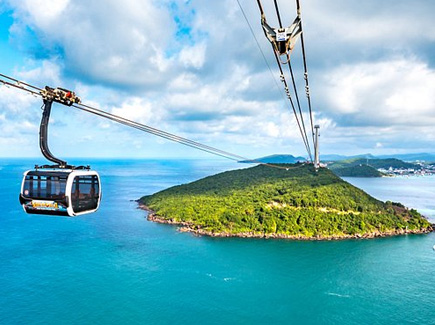
Day 1 — Arrive Danang (via Hanoi or HCMC, or nonstop if schedules serve). My Khe beach evening. Overnight Danang. Day 2 — Ba Na Hills full day. The record-setting cable car up, the Golden Bridge held by giant stone hands, the French village theme area. Go on a weekday and go early — clouds swallow the bridge by afternoon. Overnight Danang. Day 3 — Marble Mountains + move to Hoi An. Caves and pagodas in the morning, then the 40-minute transfer. Hoi An's lantern-lit old town at night is the single most photographed scene in Vietnam and deserves the hype. Overnight Hoi An. Day 4 — Hoi An slow day. Old-town heritage houses, a cooking class or lantern-making workshop, 24-hour tailoring if you want it (fit one, collect next day), coconut-boat ride in the water-palm channels. Overnight Hoi An. Day 5 — Beach or My Son ruins. An Bang beach morning, or the My Son Hindu Cham temple sanctuary — 4th-century Shiva temples, a genuinely moving site for Indian visitors. Overnight Hoi An. Day 6 — Transfer to Danang, depart.
Itinerary C — 7N/8D North + Central: the honeymoon and repeat-visitor shape
Days 1–4: Itinerary A without Ninh Binh. Day 5: fly Hanoi–Danang (80 minutes), evening on My Khe beach. Days 6–7: Ba Na Hills and Hoi An as above. Day 8: depart from Danang. This is our most-requested Vietnam build: cruise + lanterns + one beach pause.
What a Vietnam trip really costs from Delhi
*₹45,000–₹85,000 per person (indicative · 5N/6D · ex-Delhi · twin sharing · excludes GST & TCS)** *Indicative market range as of Aug 2026. Contact us on +91 97299 91755 for a current quote.
The bottom is a 3-star single-zone trip on a low-cost carrier booked 90+ days out; the top is a 4-star build with the overnight Halong cruise in a balcony cabin (the cruise category moves the total more than the hotels do). Land-only listings from ₹27,000 are real and flight-less. Booking 90–120 days ahead reliably beats last-minute fares by a wide margin on this route.
Sitting outside every package price, whoever you book with:
- Visa: USD 25 per person (single-entry e-visa) — about ₹2,200. Multiple-entry USD 50.
- TCS on the package — a prepayment recovered in your ITR; rate confirmed at quote time.
- GST on the invoice.
- Personal spends: coffee culture, tailoring in Hoi An, massages, basket-boat and kayak tips. Vietnam's on-ground costs are the lowest in this cluster — which is exactly how the shopping sneaks up on you.
Flights from Delhi
Delhi–Hanoi nonstop is roughly 4.5–5 hours; Delhi–Ho Chi Minh City about 5–5.5. Vietjet Air, Vietnam Airlines and Air India have all operated Delhi nonstops to Vietnam; central-Vietnam trips usually route via Hanoi or HCMC plus an 80-minute hop to Danang. Vietnam runs 1.5 hours ahead of IST — no jet lag worth naming.
Currency and daily spend
Vietnam uses the dong (VND) and the denominations are cheerfully enormous: VND 100,000 is roughly ₹330–350 at August 2026 rates — check the day's rate. A bowl of pho or a banh mi runs 40,000–70,000 dong, a proper restaurant meal 150,000–300,000, a Grab ride across town 60,000–120,000, an hour's massage from 300,000. ₹1,800–3,000 per person per day covers food and movement comfortably — the lowest daily burn in this cluster. Cards work in cities; cash rules in markets and small towns. Count your zeroes when paying: handing over 500,000 instead of 50,000 is the classic tourist error, occasionally "helped along" by a quick-handed vendor.
Honeymoon, family, friends — how Vietnam changes shape
Honeymooners: Itinerary C with a balcony cabin on the Halong cruise and a boutique riverside stay in Hoi An; a couple's photo session in the lantern streets costs a fraction of what the same shoot costs anywhere else and is genuinely worth it. Families: central Vietnam wins — Danang's beach hotels, Ba Na Hills (a theme park children adore), Hoi An's lantern boats. The Halong overnight works for children over six; cabin sizes and gangways are the constraint below that. Friends' groups: north for adventure (add Sapa's trekking or Ha Giang if you have days), HCMC + Cu Chi tunnels + Mekong for history-leaning groups, and Vietnamese craft-beer streets in Hanoi and HCMC for the evenings.
Food — the vegetarian and Jain reality
Honest version: Vietnam is a step harder than Thailand for vegetarians, and two steps harder than Bali — but entirely workable with the right word. That word is "chay" (vegetarian): every town has com chay / quan chay eateries, often near pagodas, serving fully vegetarian Vietnamese food — pho chay, fresh spring rolls, tofu-lemongrass dishes. The trap is ordinary kitchens, where fish sauce (nuoc mam) seasons nearly everything including the vegetables; say "an chay, khong nuoc mam" (vegetarian, no fish sauce) or show the phrase written down. Indian restaurants now operate in Hanoi's Old Quarter, HCMC and Danang, several pure-veg. Jain travellers: this is the hardest destination in this cluster for strict Jain food from local kitchens; the working solution is Indian Jain-aware restaurants plus hotel-briefed breakfasts, and we pre-arrange both when you flag it at enquiry — please do not leave it to the hotel front desk on arrival. Vietnamese coffee (with condensed milk, or black) and the tropical fruit stalls are safe delights throughout.
What NOT to do in Vietnam
- Do not buy your e-visa from a lookalike site. The official portal is evisa.gov.vn — USD 25. Paying USD 100 to a.com "official portal" is the most common pre-trip loss on this route.
- Do not book central Vietnam in October and expect the postcard Hoi An. It floods. Beautiful in its own way; not what you paid for.
- Do not take the Halong day trip if the overnight is affordable. The bay's magic is dawn and dusk; day boats see neither.
- Do not cross roads waiting for a gap. There is no gap. Walk slowly and predictably; the scooter river flows around you. Sprinting or stopping mid-crossing is how tourists get hurt.
- Do not hand your passport as a scooter-rental deposit — use cash; getting documents back from a rental dispute is miserable.
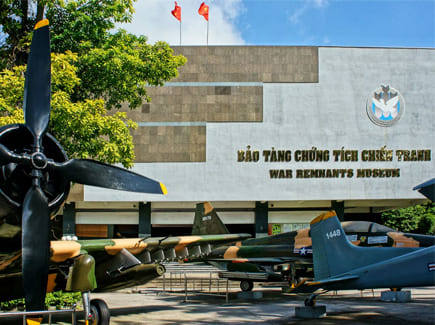
- Do not photograph military sites or border installations, and treat war museums with the gravity locals bring to them.
Common mistakes Delhi travellers make
Stuffing three zones into five nights. Missing the Tet dates and arriving to a closed country. Filing the e-visa five days before a Friday flight and discovering "3 working days" excludes weekends and holidays. Assuming vegetarian will be as easy as Thailand. And skipping travel insurance on the trip most likely in this cluster to involve boats, cable cars, kayaks and 500-step viewpoints.
Operator's note (FILL BEFORE PUBLISH): [YashTrip observation hook — e.g. the % split of our Vietnam bookings north vs central, or a real e-visa name-mismatch save at Delhi airport.]
Frequently asked questions
Do Indians need a visa for Vietnam?
Yes. There is no visa-free entry for Indian passport holders. The standard route is the e-visa on the official portal evisa.gov.vn — USD 25 single-entry, USD 50 multiple-entry, valid for stays up to 90 days, processed in about three working days. Print the approval and check every field matches your passport exactly.
How much does a Vietnam trip cost from Delhi?
Indicatively ₹45,000–₹85,000 per person for 5 nights with flights, twin sharing, as of August 2026 — excluding GST and TCS. Vietnam's on-ground costs are the lowest in Southeast Asia, so the flight and the Halong cruise category decide most of the total. Contact us on +91 97299 91755 for a current quote.
How long is the flight from Delhi to Vietnam?
About 4.5–5 hours nonstop to Hanoi and 5–5.5 to Ho Chi Minh City. For Danang and Hoi An you typically connect through Hanoi or HCMC, adding an 80-minute internal hop. Vietnam is 1.5 hours ahead of India — jet lag is not a factor.
Hanoi or Danang — which should a first-timer pick?
Choose by what you want. North (Hanoi + Halong + Ninh Binh) is Vietnam's culture and its most famous scenery — the overnight bay cruise. Central (Danang + Hoi An + Ba Na Hills) is beaches, the lantern old town and the Golden Bridge — easier with children. In five nights, pick one. In seven, do both with one internal flight.
Is Halong Bay worth the overnight cruise?
Yes — it is the single best-spent upgrade in Vietnam. Day trips reach the bay at its most crowded hours and leave before sunset; the overnight gives you dusk, dawn, kayaking in quiet water and a night among the karsts. Cabin categories, not hotels, are the biggest price lever in a north Vietnam package.
When is the best time to visit Vietnam?
By zone: north is best October–November and March–April; central is best February–May; April is the one month the whole country works. Avoid central Vietnam in October (flood season in Hoi An) and check the Tet new-year dates — during Tet week, much of the country books out or closes.
Is Vietnam good for vegetarians?
Workable with one word: "chay" (vegetarian). Every town has dedicated chay eateries, often near pagodas, and Indian restaurants operate in Hanoi, HCMC and Danang. The caution: regular kitchens season nearly everything with fish sauce, so specify clearly. Jain travellers should tell us at enquiry — we pre-arrange Jain meals because walk-in options are limited.
Is Vietnam cheap once you are there?
Genuinely, yes — the cheapest on-ground destination in this cluster. Street meals under ₹250, city taxi hops under ₹400, hour-long massages under ₹1,000. Budget ₹1,800–3,000 per person per day beyond the package. The currency runs in huge denominations, so count zeroes carefully when paying.
Is Vietnam safe for Indian tourists?
Yes — violent crime against tourists is rare. The practical risks are traffic (cross roads slowly and predictably; ride scooters only with a licence and helmet), petty snatch-theft of phones in big cities, and overcharging in markets. Women travellers generally report Vietnam as one of Asia's more comfortable destinations.
Can I combine Vietnam with Cambodia?
Yes, and it is a classic pairing — HCMC connects to Siem Reap by short flight, and the Angkor temples add two to three days. It needs eight-plus nights to avoid rushing either country, and a separate Cambodia e-visa. See our Cambodia page for the visa details and the combined itinerary shape.